
Building a Web Application Using AWS Amplify and AWS Services

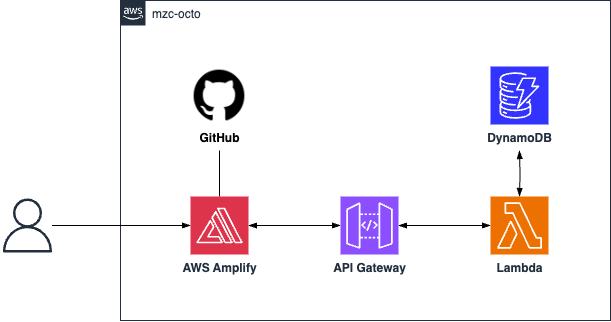
Summary This blog aimed to test AWS Amplify and AWS Services for web development, exploring their advantages over on-premises environments. AWS Amplify was utilized for constructing the frontend web application, while AWS Lambda and API Gateway were employed for backend logic implementation. A simple login page was created for data validation, with DynamoDB storing the data for validation purposes. Please note that this blog doesnt specifically explain setting backend logic using AWS Services such as API Gateway, Lambda, and DynamoDB. Other AWS DB services are viable options, and Lambda functions can be implemented differently based on language preferences. What isAmplify AWS Amplify streamlines full-stack app development. Its libraries, CLI and services enable an easy connection of the frontend to the cloud for authentication, storage, APIs, andmore. Reference https://docs.amplify.aws/ Frontend AWS Amplify The frontend was built using AWS Amplify. The Host web app option in Amplify was selected, which triggered an automatic build and deployment of the code uploaded on GitHub. This process led to the automatic deployment of the pre-uploaded index.html file. My GitHub repository Once the Github repository branch is added and building settings are configured, the hosting environment is ready with an accessible URL. Backend Amazon DynamoDB The web applications purpose is to login and validate data stored in DynamoDB. Items were created with the username Danny and its password for verification. DynamoDB was chosen for this task as it is relatively less expensive thanRDS. Reference https://docs.aws.amazon.com/amazondynamodb/latest/developerguide/Introduction.html AWS Lambda A function was implemented using Python to accept data and verify its validity with information stored in DynamoDB using Lambda. If the entered data exists in the DB, a login success message is returned. Ensure AmazonDynamoDBAccess and LambdaDynamoDBExecutionRole are set for Lambda to access DynamoDB. Reference https://docs.aws.amazon.com/lambda/latest/dg/welcome.htm Amazon APIGateway To link Amplify and the Lambda function, a GET method REST API was created using APIGateway. In the JavaScript section of the index.html in the Github repository, the url variable is where the API Gateway URL should be inserted. Reference https://docs.aws.amazon.com/apigateway/latest/developerguide/welcome.html Accessing theWeb Once all services are ready, the web is accessible and the alert returns to check whether the value isvalid. Conclusion The advantages discovered while implementing a simple web using AWS Amplify and AWS services are asfollows: Easy Deployment and Management: AWS Amplify simplifies the deployment and management of web applications. Instead of manually handling complex tasks such as server settings and operations, web applications can be deployed and managed with a fewclicks. High Performance: AWS Amplify delivers content quickly to users worldwide using a CDN (Content Delivery Network). In on-premises environments, additional work is required to set up and manage separate CDN services, but AWS has this feature built-in. Reference https://aws.amazon.com/amplify/faqs/?nc1=h_ls Scalability and Security of AWS Services: AWS services provide high scalability. Services like AWSs Lambda, API Gateway, and DynamoDB show high integration and scalability, and access management between services is also possible using IAM. This enables tasks that are difficult in on-premises environments. The intention of this blog is not to definitively state that using Amplify is the best choice for building a web application over on-premise environments. Instead, it aims to share insights about the strengths of Cloud-Based Development Services in comparison to on-premise environments. Please feel free to share your thoughts and experiences in the comments below. Thank you forreading. #MegazonCloud #AWS #Cloud #Cloudvillains #Amplify #Lambda #APIGateway #DynamoDB Building a Web Application Using AWS Amplify and AWS Services was originally published in Cloud Villains on Medium, where people are continuing the conversation by highlighting and responding to this story.